


This essay is adapted from the script of my latest video, You Want a Trad Wife? What Does She Get From You? The full version is on YouTube.
A lot of young Christian men say they want a traditional marriage. Unfortunately, many of them are preparing for something else.
These men know exactly what they want from a wife. Feminine. Submissive. Home with the kids. Never gives him any trouble. Sounds great, right? Now ask them what she gets from him, and watch how fast that list runs out.

That’s the gap. A young man can spend years writing a list of demands for a woman he hasn’t met, and never once write the list for himself.
Some of those men will never marry. Some will marry and break what they were given, because they only seriously considered one half of the equation. And some will take the bitterness they grew while they waited, and carry it somewhere much darker.
I’m a former resident of the Manosphere. I found it in 2018, and by 2021 I was a rising-star contributor. I’m also married, since July 2025. I’ve just walked across the bridge that a lot of young men are staring at, and I think that perspective is worth something. Please check my work, and keep your own Bible open.
The fantasy
The men drawn to the trad world are reacting to something real. Many grew up hearing that masculinity was toxic, and watched their parents’ marriage come apart. Then in church they sat in front of pastors who seemed embarrassed by Ephesians 5 and skipped straight to the parts about being nice. They’re right about a lot of that. If you want a wife who loves being home with your children, that is a good desire. If you want to lead your household, Scripture calls you to it. Headship is real.
So where does it go wrong? Somewhere between the good desire and the wedding day, the good things got repackaged.
The old Manosphere taught men to “covet the car, covet the body, covet the woman, covet the lifestyle.” Now there’s a Christian Manosphere, and in that corner of the internet the “women” part got a makeover.
The old goal was a lot of women for short periods of time. The new goal is one woman, the right kind, forever. Long dress. Bread rising on the counter and a bun rising in the oven. Sound familiar?
That can sound like repentance. Sometimes it is. But for a lot of men it’s the same covetousness with a better wardrobe. The trad version just swaps the car for a homestead and the hookup for a wife. The coveting stays.
Here’s a test. When a young man describes the marriage he wants, count the sentences. You’ll hear about her past, her politics, her views on submission, her cooking, how many kids she’ll give him, whether she’ll ever talk back. You’ll hear almost nothing about what she’s going to receive.
What kind of man is she marrying? How does he handle money and anger? Does he keep his word? Does he pray? Is anyone in his church able to vouch for him? Ask him those questions, and you usually get silence. But she’s about to make a covenant with you before God. She has to ask them, and so do the people who love her.
So what is the fantasy actually selling? Mostly status and control. A wife is proof to other men that you won, and the marriage is a thing to be seen, with the family lined up at church in coordinated outfits. Headship means your word is final, and peace in the home means nobody ever pushes back.
Both are about what the marriage provides for the man. What it provides for her is just assumed.
A witness
The word I want to give you for all this comes from an unlikely place. Robert Louis Stevenson, who wrote Treasure Island, published an essay on marriage in 1881 called Virginibus Puerisque.

A single man, Stevenson says, can live with his failures pretty comfortably. You “recognise your failures with a nod, and so, good day.” Then you marry:
“You have wilfully introduced a witness into your life.”
And a few lines later:
“To marry is to domesticate the Recording Angel.”
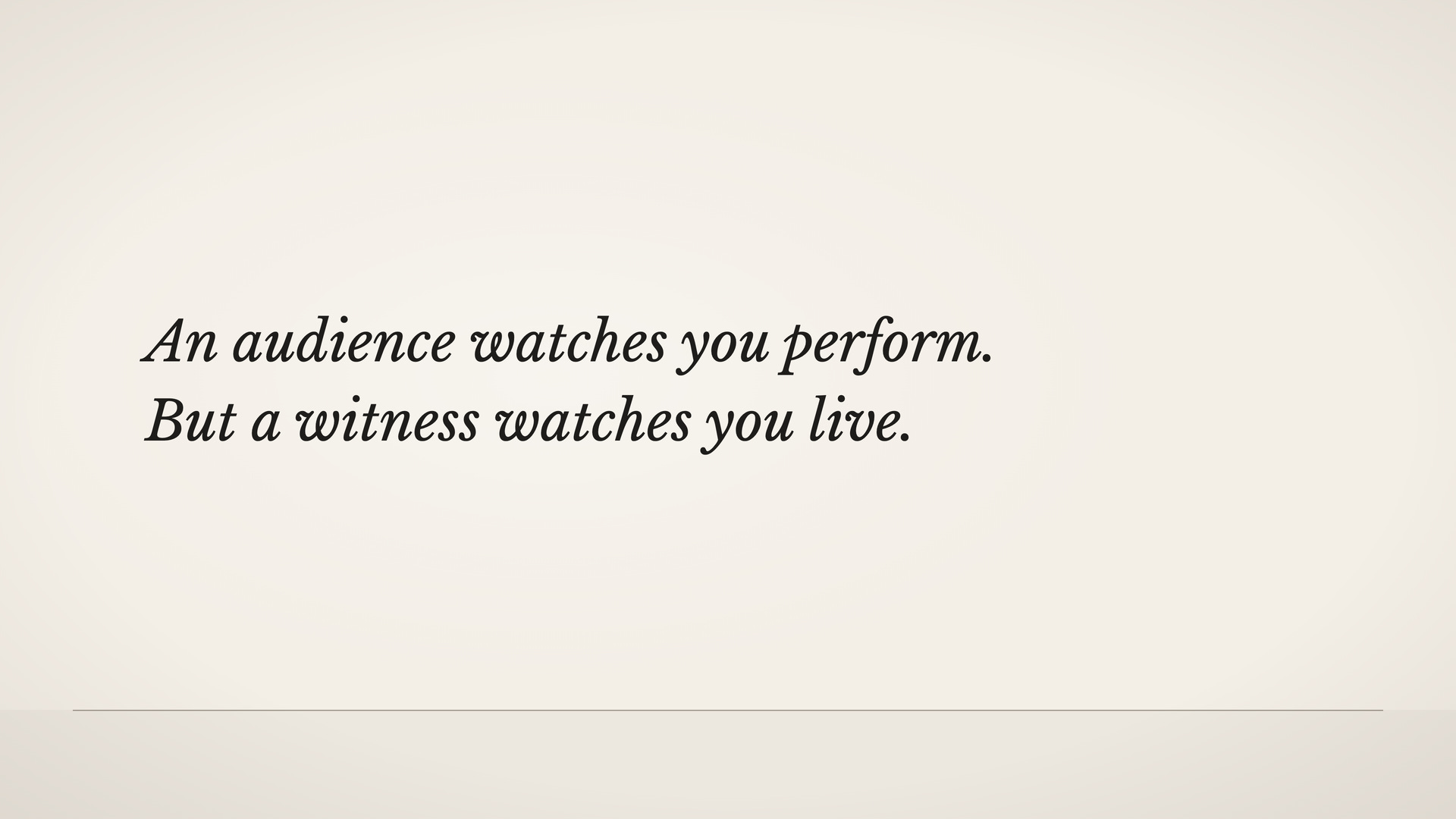
Think about the difference between a witness and an audience. An audience watches you perform. It only sees what you choose to show it, so it claps when you’re impressive and scrolls on when you’re not. But a witness watches you live.
Your wife sees you at eleven at night when you’re tired and short with her. She knows whether you actually pray, or just post about prayer online. And Stevenson saw that she is “not only the judge, but the victim of your sins.” She has the most at stake in every decision you make.
The fantasy wants an audience, a wife who makes you look good and a crowd of men who notice. God gives you a witness instead. And a man who has spent his single years performing for an audience is not ready to be witnessed.
What Scripture actually asks of a husband
Ephesians 5 is the passage everyone in the trad world quotes, and they almost always quote the first part:
Wives, submit to your own husbands, as to the Lord. For the husband is the head of the wife even as Christ is the head of the church, his body, and is himself its Savior. Now as the church submits to Christ, so also wives should submit in everything to their husbands. (Ephesians 5:22–24, ESV)
I believe that, every word of it, and I’m not going to soften it. But notice how short it is. Three verses. Then Paul turns to the husbands and keeps going for the rest of the chapter, three times as long. If you only ever quote the first three verses, ask yourself why you stopped reading where you did.

Husbands, love your wives, as Christ loved the church and gave himself up for her, that he might sanctify her, having cleansed her by the washing of water with the word, so that he might present the church to himself in splendor, without spot or wrinkle or any such thing, that she might be holy and without blemish. (Ephesians 5:25–27, ESV)
That’s the standard, and Christ sets it. How did he love the church? He gave himself up for her. And his headship points toward her good: “that he might sanctify her,” “that she might be holy.”
In the fantasy, headship is about what the marriage does for the man. In Ephesians 5, headship is about what the man does for his wife. Her holiness is his assignment. So the question changes. You’ve probably been asking, “Will she submit to me?” Paul wants you asking, “Will she be more like Christ because she married me?”
When I interviewed Joel and Mary Beeke, Dr. Beeke told me he wants to stand before Christ on judgment day and hear his wife say she was made more holy because she was married to him. A Christmas family photo can look great and say nothing about any of it.
Christ does it “by the washing of water with the word,” and you can’t wash anyone with a Bible you never open. The habit you build alone is the habit you’ll bring to her. And read all of it. A lot of guys ask me about the imprecatory Psalms lately. Cool, they’re in there. I get far fewer questions about Psalm 51, or Psalm 119, or Psalm 23. It’s the same habit that turns marriage into a list of her duties and leaves out the sin in a man’s own heart.

In the same way husbands should love their wives as their own bodies. He who loves his wife loves himself. For no one ever hated his own flesh, but nourishes and cherishes it, just as Christ does the church, because we are members of his body. (Ephesians 5:28–30, ESV)
You don’t yell at your knee for being injured, and you don’t post about how disappointed you are in your shoulder. You feed it and rest it. That’s how you treat your wife, because she is your own flesh. As the late Voddie Baucham put it in a sermon on this passage, “she’s not just mine, she’s me.”
That offends both feminism and the Manosphere. To feminism, a married woman is no longer an independent person. To the Manosphere, she’s no longer an object. She is you.
Paul ends the passage, “let each one of you love his wife as himself, and let the wife see that she respects her husband” (Ephesians 5:33, ESV). A lot of young men love the last half of that verse. Fine. But a husband who demands respect he hasn’t earned is asking his wife to obey Scripture uphill, and a husband who loves her like Christ makes that hill a lot less steep.
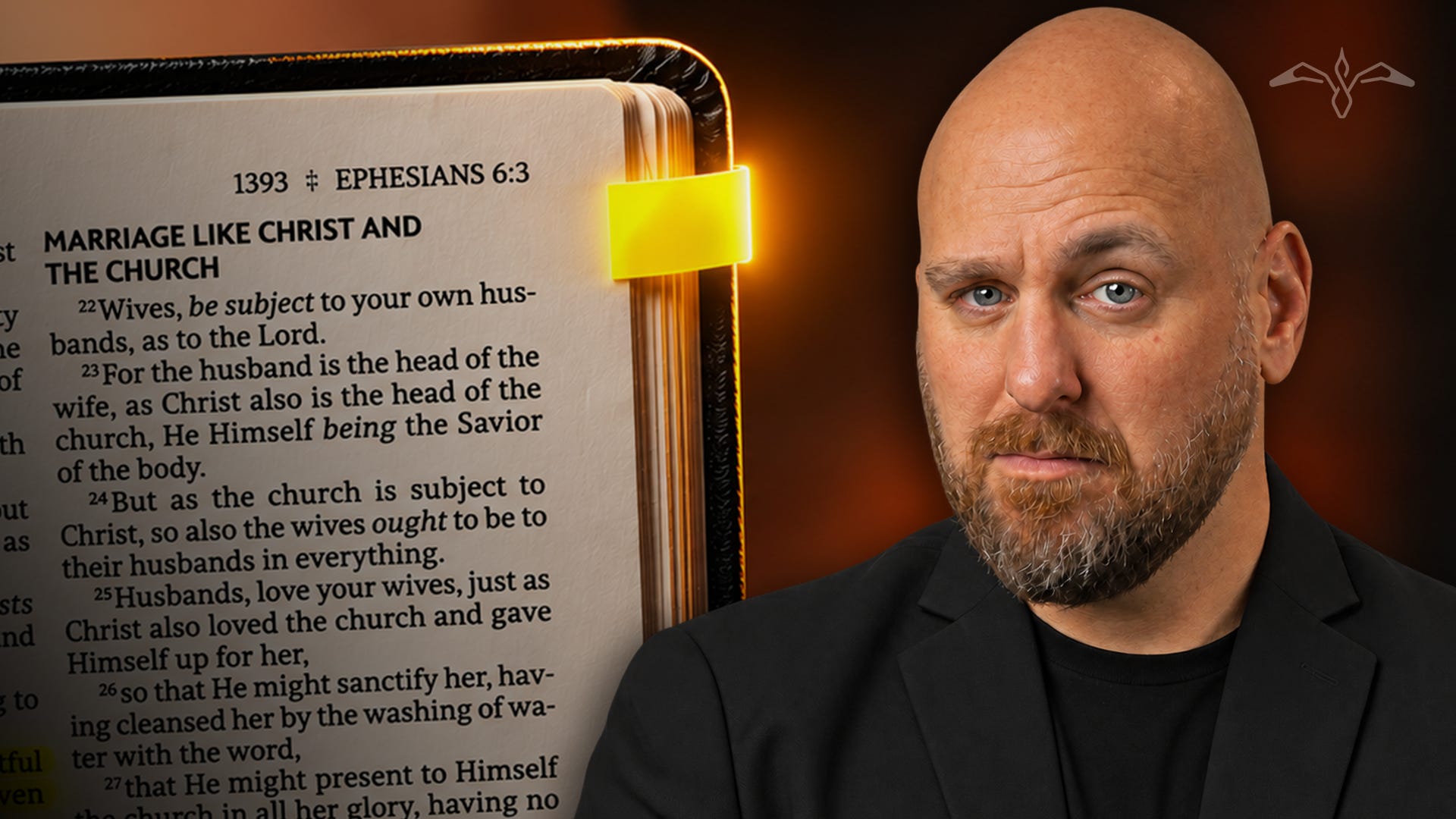
I keep a little yellow flag in my Bible that opens straight to this part of Ephesians 5. I put it there after I got married. Whatever else I’m reading, that flag reminds me of my duties to my wife, and that everything I read is made manifest first in my conduct as a husband.

Authority that serves
Christ is also King. He has authority. And he told us how that authority works among his people:
And Jesus called them to him and said to them, “You know that those who are considered rulers of the Gentiles lord it over them, and their great ones exercise authority over them. But it shall not be so among you. But whoever would be great among you must be your servant, and whoever would be first among you must be slave of all. For even the Son of Man came not to be served but to serve, and to give his life as a ransom for many.” (Mark 10:42–45, ESV)
“But it shall not be so among you.” Among his people, the one who goes first is the one who serves first, and the one with the most authority bleeds first. So headship means you go first. You’re the first one to apologize after a fight, and the first one on your knees when the house is in trouble, even when the trouble isn’t technically your fault.
Blame and responsibility are different things. The fantasy runs on blame. Headship runs on responsibility.
Peter puts what a husband owes his wife into one verse:
Likewise, husbands, live with your wives in an understanding way, showing honor to the woman as the weaker vessel, since they are heirs with you of the grace of life, so that your prayers may not be hindered. (1 Peter 3:7, ESV)
“Live with your wives in an understanding way” means knowledge. Study her the way a good craftsman learns his material. A husband doesn’t get to say, “I just don’t get women,” and leave it there. Men online use “weaker vessel” as a put-down, but Peter uses it as the reason to honor her. You handle the most valuable thing in the house with the most care. And Peter ties your prayers to all of it. You can’t be harsh with her all week and expect heaven to lean in when you pray on Sunday.
Paul says it even more bluntly:
Husbands, love your wives, and do not be harsh with them. (Colossians 3:19, ESV)
Now put status and control next to all of that. Christ’s headship over his church cost him his life. The only status he cared about was hers, presented in splendor. And the control he exercised belonged to a man who could have called down legions of angels and went to the cross instead.
My own story
Let me do something that makes me uncomfortable and talk about myself.
I didn’t come into marriage with a great model for it. My parents stayed married until I left for college, but it was an unhappy marriage, and they divorced after I left. I was under-fathered. I’m not talking down to you from a mountain I was born on top of.
There were two big shifts for me, about a year apart.

In the fall of 2024, I had just met and started courting my now wife, Tamara. We were long distance. One day I was working at my desk at home, and I looked out the door of my office into the living room and thought, what would it be like if she were there?
And suddenly I realized that all that empty space would someday be taken up by another person. She would see my moods, my disappointments, my bad habits. When I came out to eat, I couldn’t just put an Agadmator video on my phone and eat steak and rice like I used to. She’d ask me how my day went, and I’d have to give more than a one-word answer.
In other words, I’d have a witness. I figured that out, or God showed me, before I’d ever read the Stevenson quote.
And let me tell you, brother, things began to change for me from that moment on, slowly. I started asking harder questions about how I was using my time. I started picking up my socks. I didn’t walk forward with only stars in my eyes, even though my wife is beautiful and amazing. I knew my life was about to change forever, and that it was my responsibility to start eliminating the ways I was being boyish, in favor of being a man.
After the wedding and the honeymoon, we stayed in an Airbnb in Moscow, Idaho, with our daughter before leaving for Phoenix. That first night back, after dinner, we did what I had already decided we’d do: our first family worship. I knew if I waited, the excuses would only build. “We’ll wait till we get home. We had a long flight. It was a busy day.” Nope. Start where you are, and do what you can. We started in John 1:1, prayed together, giving thanks for our new household, and sang the Doxology. I tried not to croak like a frog, as I discovered my new wife has a voice like an angel.
And if you’re ever down for a challenge, try explaining “In the beginning was the Word, and the Word was with God, and the Word was God” to a four-year-old.
The next big change came a few months later, when my wife was pregnant with our son. I realized all at once that I was a father of one about to be a father of two, and my decisions mattered. Everything I was working toward had to benefit them before it benefited me. It was a total upgrade of the witness. Minutes and money began to matter in a whole new way.
And I’ll be honest, I didn’t handle that well at first. For the first time in more than 20 years, I got depressed. I was overwhelmed and confused, even afraid. I compared who I was with who I wanted to be, and I saw myself falling far short. The weight of bad decisions in my past made me angry at my parents and the culture, and I had to get comfortable with the fact that they didn’t make the decisions that led me here. I did.
That broke my bitterness, but it didn’t make me feel better. In a way it made me feel worse, and I saw just how desperately I needed a Savior. I needed a God with the cattle on a thousand hills, who can multiply the loaves and fishes to feed five thousand, who created the universe and me from nothing, and who hears my prayers and understands my needs even better than I do.
Here I was with a wife sleeping next to me, a daughter in the other room and a baby growing in my wife’s womb, and it was all on me. I knew I couldn’t do it alone, and that any man who tries is insane. But I was committed to having a family unlike any I’d grown up knowing. If God saved me from that, he could save me from this. And praise God, rather than abandoning me to try in my own strength, the Lord led me back to him.
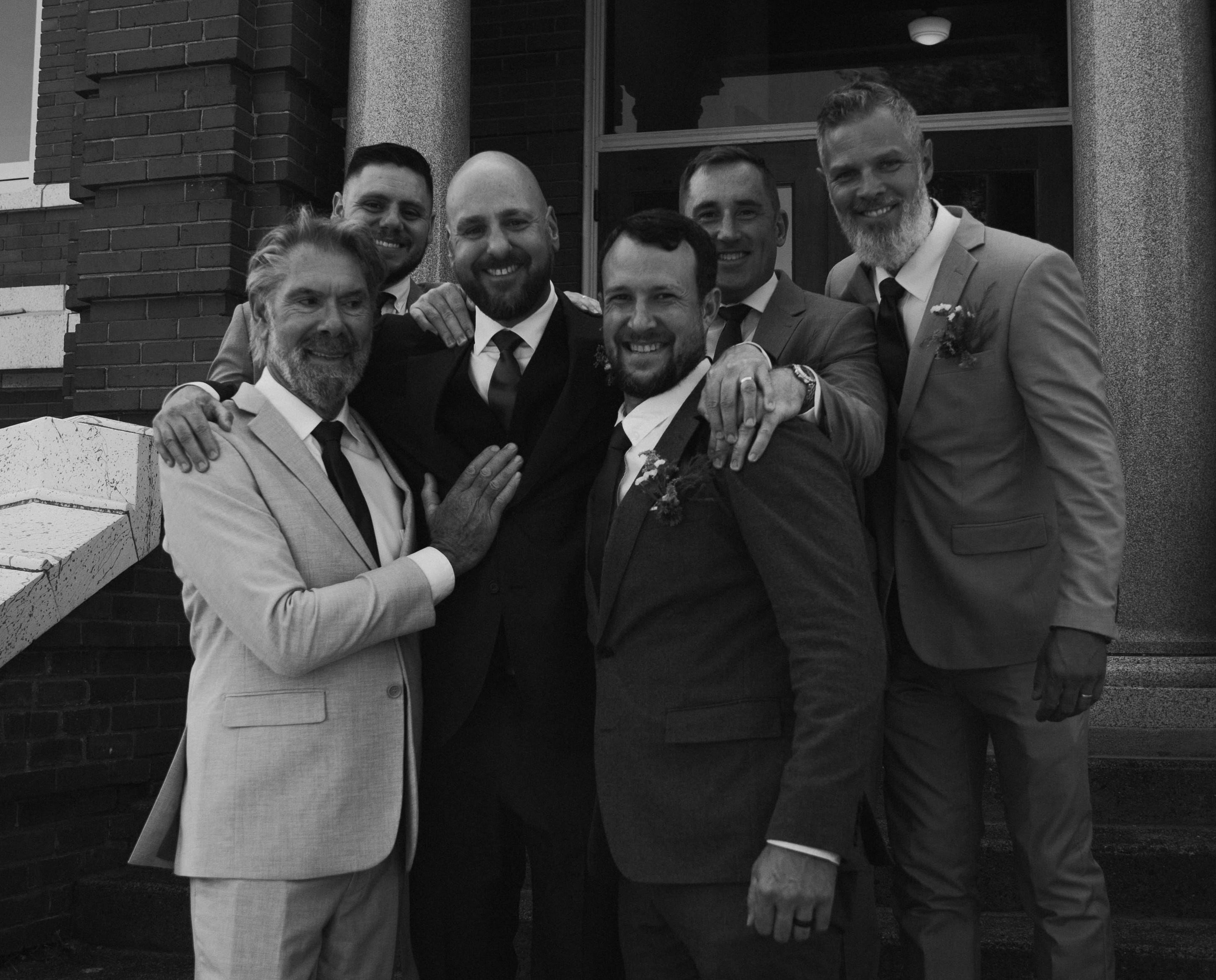
I gained a whole new respect for the married men who stood behind me at the altar and knew things I couldn’t even fathom when I said “I do.” And I gained a whole new respect for my dad. We didn’t have the perfect household growing up, but I know he did his best.
Whatever you got handed by your own family, good or bad, doesn’t get the last word. Your father’s marriage is not your destiny, and neither is the internet’s version of marriage. God can make a husband out of a man who was never shown how to be one. I’ve watched him do it, and I’m still watching him do it.
But he usually does it through ordinary means, over time, with other people involved. A lot of young men are skipping that part and just waiting instead. And some of them are waiting angry.
Bitterness, and where it leads
I study how young Christian men get radicalized, and one of the first doors in is bitterness toward women. It usually starts with a young man who wants to get married, and it doesn’t happen. That hurts, and loneliness is real. But then something else shows up to explain the hurt.
Right at the center of the Manosphere sits what I call the blame ladder. It doesn’t climb up toward responsibility. It climbs down, away from it, and every rung takes a man further from repentance.

The first rung down is fathers: the boomers ruined everything. The next rung is mothers, and women broadly. That’s the red pill. All women are like that, so why bother? But your mother is a woman. You don’t get her as a carve-out. Notice that those first two rungs both break the fifth commandment:
Honor your father and your mother, that your days may be long in the land that the LORD your God is giving you. (Exodus 20:12, ESV)
The grievances are sometimes real. Divorce law has been cruel to a lot of men. But even when the grievance is real, the internet disciples men in blame instead of responsibility. Blame leaves a man feeling powerless, so it turns into anger and points outward, and anger pointed outward hardens into bitterness.
See to it that no one fails to obtain the grace of God; that no “root of bitterness” springs up and causes trouble, and by it many become defiled; (Hebrews 12:15, ESV)
Roots grow underground, so you don’t see them until they’ve cracked the foundation. A young man is stuck, and along comes a message that says, “Your life situation is not your fault. It’s women, or feminism, or the system.” That feels like relief, and the anger feels like action. But anger burns out, so it has to be reignited with a bigger dose every time. The molehill becomes a mountain, and then the mountain becomes a volcano.
Once a man has learned to blame one group of people for the pain in his life, he’s learned a skill, and the ladder doesn’t stop at women. The next rungs down are institutions, then minorities, and at the bottom, very often, the Jews. The man who says “all women are like that” has already accepted the logic that ends at “all of them are like that.”
There’s a version of this in Christian clothes, where a wife becomes a part in somebody’s plan to renew “the West,” or a race. So ask yourself what sits first in your identity. For me, it’s Christian, then man, then American. Two things can’t sit in the first spot at once. If “white” or “Western” or “trad” has crept in ahead of Christ, everything underneath gets read through it, your marriage included.

Men caught up in this usually think they have a political problem. What they actually have is a sanctification problem. Bitterness is a sin. You confess it and repent of it, and you receive the forgiveness Christ already bought for you.
Let all bitterness and wrath and anger and clamor and slander be put away from you, along with all malice. Be kind to one another, tenderhearted, forgiving one another, as God in Christ forgave you. (Ephesians 4:31–32, ESV)
If a woman wronged you, forgive her. If your mother wronged you, forgive her too. Forgiveness admits that something really happened, and then it hands the debt to God, who judges justly, so you can stop collecting interest on it.
A bitter man makes a lousy husband and a very good prosecutor. And no woman wants to marry the prosecutor.

What preparation really looks like
You can’t make a godly woman appear. You can become a man a godly woman would be wise to marry.
Look at the order in Genesis 2. First, “The LORD God took the man and put him in the garden of Eden to work it and keep it” (Genesis 2:15, ESV). Only then does God say, “It is not good that the man should be alone” (Genesis 2:18, ESV). The wife came to a man who’d already been given a task. Proverbs says the same thing:
Prepare your work outside; get everything ready for yourself in the field, and after that build your house. (Proverbs 24:27, ESV)
So here’s my list. None of it is complicated. It’s just hard, and most of it is pretty ordinary.
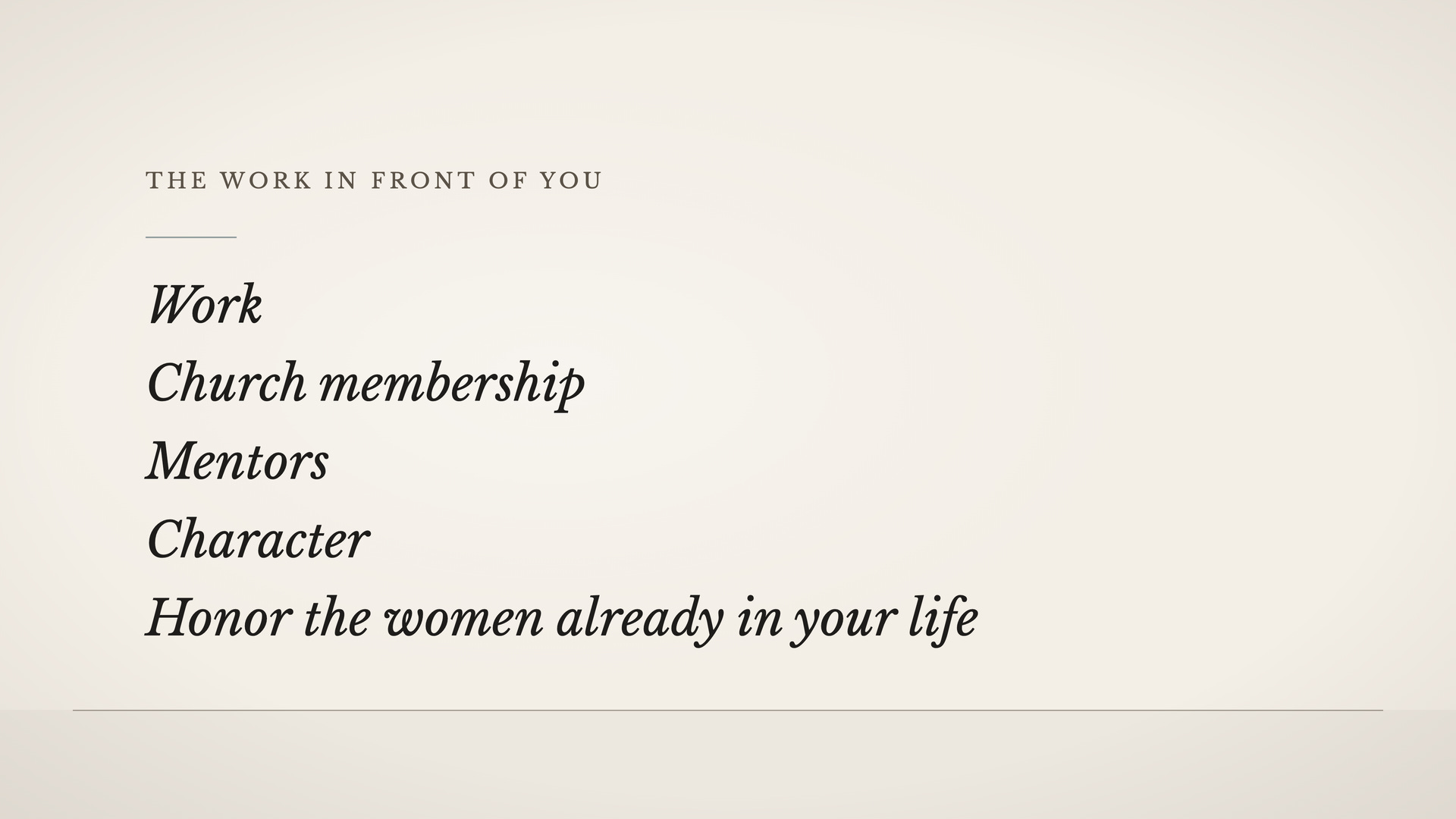
Work. Get a job, show up on time, and get good at something. You don’t need to be rich before you can marry, but you need to be a man who works, and who can be counted on.
But if anyone does not provide for his relatives, and especially for members of his household, he has denied the faith and is worse than an unbeliever. (1 Timothy 5:8, ESV)
If you’re spending four hours a night on games and the rest of your time online arguing about what women owe men, that time belongs to your future wife and family. Start spending it on them now.
Church membership. Attending isn’t enough. Become a member and put yourself under elders who know your name and can call you on your sin. A young woman’s father is going to want to know who can vouch for you. “I watch a lot of good theology content online” isn’t an answer. “Here’s my pastor’s number” is much better.
Mentors. Paul tells Titus, “Likewise, urge the younger men to be self-controlled. Show yourself in all respects to be a model of good works” (Titus 2:6–7, ESV). The teaching comes with an example attached. When the filmmaker Adam Coleman and I were on Tim Pool’s show together, he said “the good content that comes from the manosphere red pill is actually stuff that your father would have told you.” It’s fathers’ advice, delivered late by strangers. You can get the real thing. Find a man in your church who’s been married twenty or thirty years and whose wife still looks at him like she’s glad she married him. Buy him breakfast, and ask him what he got wrong and what he did to fix it. Then sit at his table. You’ll learn more from one dinner in a good home than from a hundred hours of videos about marriage, including mine.
Character. This is the big one, and nobody can see it from the outside. If you’re watching pornography, stop. Tell your pastor, and get accountability that has teeth, because every time you watch it you’re training yourself to treat women as objects for your use. And maybe the most important question: do you know how to repent? Can you say, “I was wrong. I’m sorry. Will you forgive me?” and mean it, without a “but” at the end?

A marriage runs on that sentence. If you can’t say it to God and to the men around you now, you won’t suddenly be able to say it to your wife.
Honor the women already in your life. If you can’t speak with honor to your own mother, you’re not going to speak with honor to your wife. The blame ladder starts with dishonoring your father and your mother, so the way back up starts with honoring them. Call your mom and thank her for something specific.

My mother died 20 years ago, 14 years before I became a Christian. I’ve had to do all my repenting without her. If your mother is still with you, that is a blessing, because she won’t always be there. Don’t underestimate how sanctifying it will be to say, “Mom, I dishonored you once upon a time. I love you. I’m sorry. Will you please forgive me?”
And treat the young women in your church as sisters in Christ, not a pool of candidates. Every one of them deserves to be treated like someone’s future wife, because Lord willing, all of them will be.
Notice that nothing on that list depends on a woman. You can start every one of those tonight, which means you can stop waiting, and stop resenting the waiting. Marriage is a calling, and you prepare for a calling by becoming the kind of man who can carry it.
Who God sees
You might think you’re a catch. God knows the truth about you.
But he gives more grace. Therefore it says, “God opposes the proud but gives grace to the humble.” (James 4:6, ESV)
If you’re performing for your bros online, God knows who you really are when the performance is over. Will the Lord let that man find a good thing? Maybe. Or maybe, for some woman’s sake, he won’t. And if I sound like I’m “white knighting,” take it up with God, because he wrote the job description.
You already have a witness
Maybe you came to this with a list for your future wife, and somewhere along the way you realized you hadn’t made a list for yourself. Better to realize it now than on your wedding day.
Some of you are already married, and you winced, because you’ve been treating your wife like an audience, or like a problem to manage. It’s not too late. Go to her, tell her what you saw in yourself, and ask her to forgive you, because she probably saw it a while ago. Your witness has been watching, so let her watch you repent.
And maybe you came in angry. I’ve lived in that world, and I’d rather you be stung by me now than wrecked later. That bitterness will not get you a wife. It will cost you one, and if you let it keep growing, it will cost you a lot more than that.
You already have a witness. Before you ever meet her, before you ever stand at the front of a church and make a vow, God already sees all of it.
And no creature is hidden from his sight, but all are naked and exposed to the eyes of him to whom we must give account. (Hebrews 4:13, ESV)
He sees the browser history and the anon account, and the loneliness under it. But the God who sees all of it is the same God who gave himself up for you. Christ didn’t wait for the church to get her act together before he loved her. He loved her while she was still a mess, and he washed her clean. Bring him the list and the anger, the porn or the laziness, whatever it is, and confess it.
If we confess our sins, he is faithful and just to forgive us our sins and to cleanse us from all unrighteousness. (1 John 1:9, ESV)
Then get up and start building. Start with whatever on that list scared you the most, and take it one day at a time.
He who finds a wife finds a good thing and obtains favor from the LORD. (Proverbs 18:22, ESV)
She’s a gift, and you receive a gift with open hands. You don’t win her like a trophy, and you’ll never finish her like a project.
So open your hands. Become the man she’ll be glad she married. And when the day comes, may you stand before Christ and hear her say she’s more like him because she married you.

AI Usage Disclosure: I used Grok to adapt my script for Substack’s format. Watch the full episode on YouTube: What God Actually Asks of a Husband
One-on-one mentorship for Christian men: willspencer.co/mentorship
Want more like this? Subscribe for essays on faith, culture, and family, weekly podcast episodes, and my free Position, Trajectory & Momentum guide in your welcome email.