


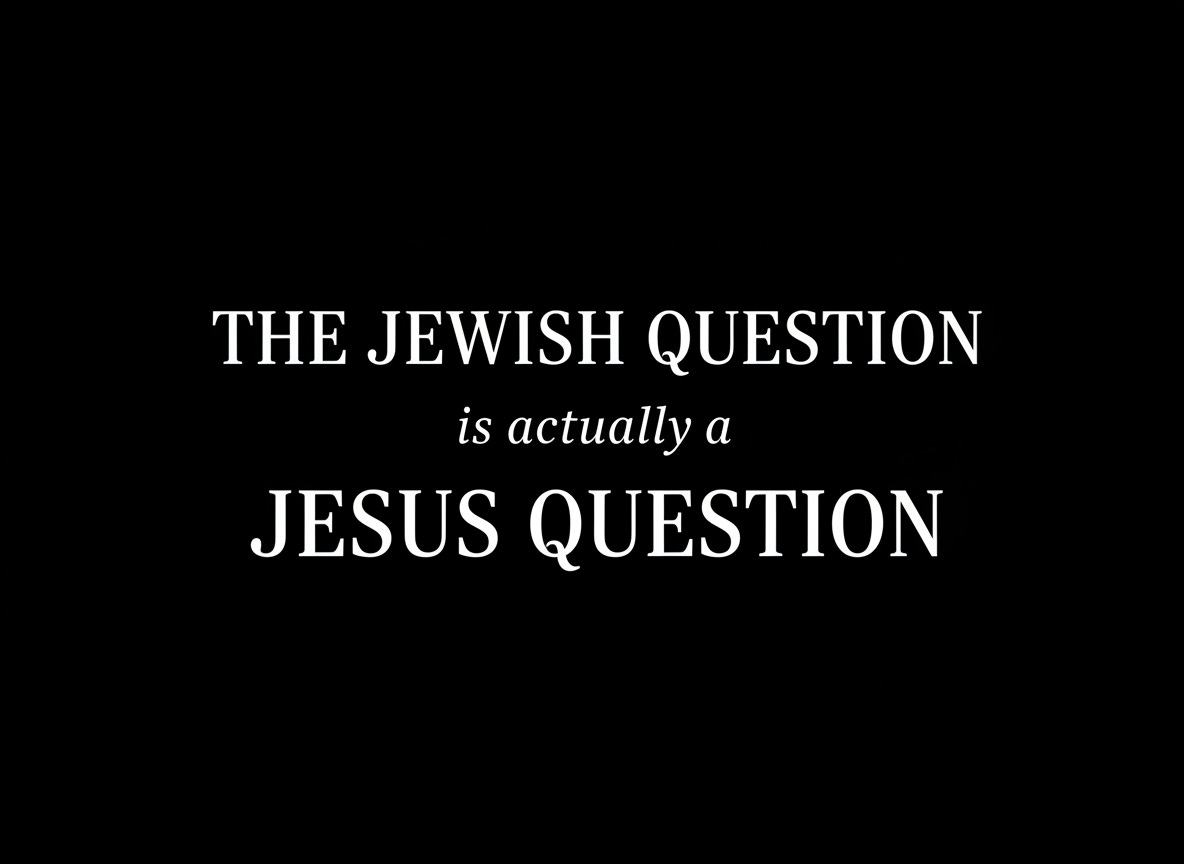
More than once in the past few weeks, I’ve been asked the question, “Why do you hate us?”
The “us” might not be who you think. It’s not feminists, gay people, or two-spirit disabled women. Instead, they’re as straight, white, and male as can be. Because the “us” in question is the so-called “New Right,” which a wise man has also dubbed the “Dank Right.”
My response is that I don’t hate anybody, which is true. To which they reply, “You might not, but you amplify the voices of those who do.”
I don’t know what’s in any other man’s heart. But here’s what I do know: cultural commentators across the political spectrum are correct that a bitter vine of ethnic and religious animosity has twisted itself around the hearts of young men. And a weatherman doesn’t have to be conservative or Christian to tell you that it’s raining.
You’d think that would be the end of it—that my interlocutor and I could look at this obvious phenomenon and agree it’s there. Perhaps we could shake hands confident in the knowledge that I don’t hate anyone. Like others, I’m merely pointing out what is.
Except that’s not what happens. Instead, the questioner usually asks, “Why can’t we be resentful and angry towards other religions and ethnicities?”
A bit of context, perhaps, before you fall out of your chair? Their question relates to a longform essay I wrote for the website Christ Over All in June 2025. In the article, I argued that a conspiratorial worldview based on hatred of the Jewish people has surfaced from the depths of the Internet into Reformed circles since 2020.
I don’t have the space to reproduce my description of that worldview here. In a thumbnail sketch, however, it’s that the Jews are the source of all evil in today’s West, including feminism, unchecked immigration, inner city violence, pornography, homosexuality, inflation, and more. You name it, the Jews are behind it.
So, what the questioners are really asking is, “Why can’t I think that the Jews are the source of all evil?” One man said those exact words. It shocks me every time, and I dread the day when it doesn’t.
Believe it or not, though, I understand the nature of the question. It’s tempting to think we can hold ideas in a mental “safe zone” where beliefs don’t work their way out. I’m sure we all think that if we were a worker in a nuclear power plant—or scientist in a zombie virus lab—we’d handle delicate contaminants with ease.
By the same logic, we can keep ideas quarantined from the rest of our being… can’t we?
You’re Not a Brain in a Jar (Unfortunately)
There’s just one problem: you’re not a brain in a jar. You’re a brain in a head with a mouth. And feet. And hands.
Put another way, thoughts have a tendency to become words, which have a tendency to become actions.
I’ll demonstrate this with a thought experiment. Imagine if you thought that guy over there was the source of all evil. No, not that guy. The one next to him. Yeah, him. He is the source of all evil in the West!
Are you just gonna sit there and let him trash your civilization? Or are you actually going to do something?
Perhaps instead you’d put the “source of all evil” guy on the top floor of a skyscraper. Or better yet, an island volcano lair! You can’t personally get your hands on him anymore. But are you just gonna let him hide out? Or are you going to rally the troops—or assemble an elite team—to stop him and his deadly schemes?
What do your moral instincts tell you?
This is why our life- and world-view matters. What we believe about reality in general influences what we think about the specific situations in front of us. Those thoughts eventually express themselves in words (Luke 6:45). Once we’ve said something, the pressure builds for us to act.
Or as James 2:17 reminds us in another context, “So also faith by itself, if it does not have works, is dead.” And the faith that “the Jews are the source of all evil in the West” is no dead faith. Because it is impervious to the demands of reason.
By contrast, the crucifixion and resurrection of Christ has been scrutinized not just by theologians and philosophers, but also by historians and archeologists. As bestselling books like The Case for Christ by Lee Strobel demonstrate, the case for the resurrection as a verifiable, if scientifically inexplicable, historical event is plain to see, even without the eyes of faith.
On the other hand, to say that Jews alone are the source of all evil in the West tends to defy rational examination.
Plot Twist: It’s Not Actually the Jews
Yes, we should question the ideology of World Economic Forum (WEF) adviser Yuval Noah Harari, an ethnic Jew and avowed transhumanist homosexual who celebrates the fact that “humans are hackable animals.” Yes, we should have tried and convicted Jeffrey Epstein before he had the bad manners to up and die somehow. I’ll even spot you the belief that Ben Shapiro has been a net negative on conservative politics. I disagree, but I’ll grant it for the sake of argument.
Before you pop the champagne bottle that “the Jews” are behind it all, Harari’s boss at the WEF is Klaus Schwab, who grew up Lutheran. Jeffrey Epstein’s partner— some say intelligence community “handler”—was Ghislaine Maxwell, raised Anglican. And the brains behind the Daily Wire? That was Jeremy Boering, who describes himself as an evangelical Christian.
Do you see? Even if the Jews are “behind it all,” they’re not standing alone, and for good reason. Because “Jews vs. Christians” is misplacing the antithesis from cosmic good versus cosmic evil into merely human terms of man versus man.
Or, as Doug Wilson puts it, “Misplacing the antithesis reassigns the line of demarcation, placing it between groups other than the seed of the woman and the seed of the serpent… [it] wants the foundational division to be separate races, or classes, or sexes, or tribes, or political factions…”
The great battle on Earth is not between Christians and Jews. Dating back to the Garden (Gen 3:15), it has always been between the Sons of God and the Sons of the Serpent, in whatever race, class, sex, tribe, or political faction they may be found—including our own.
This is why straight, white, Christian men can’t hold animosity towards Jews as “the source of all evil.” First, because the belief logically tends towards targeted acts of persecution, which are themselves evil. Second because it’s simply wrong, as in anti-Biblical and therefore anti-Christian.
In plainer terms, eventually men and women who believe that “the Jews are the source of all evil” will have to choose between that belief and their Christian faith. They can’t hold onto both. Nor can they hold the former belief in a mental “safe zone” while they attempt to live out the latter belief in public. One will eventually win out.
Stop Campaigning for Your Own Chains
To return to our Dank Right questioners, this is what I try to explain to them. Despite what they may think, they’re not asking a socio-political question. They’re asking a sanctification question, revealing a root of bitterness in their hearts (Heb. 12:15), and an envy that needs to be laid at the foot of the cross.
However forcefully they may argue with me—raising voices, calling names, or belittling me in public—they’re merely campaigning for their own chains. This is no different from any “oppressed victim class” from the lefty woke era, just with substantially less melanin.
In Luke 4:18, our Savior proclaims, “The Spirit of the Lord is upon me, because he has anointed me to proclaim good news to the poor. He has sent me to proclaim liberty to the captives and recovering of sight to the blind, to set at liberty those who are oppressed.”
Bitterness, envy, anger, and hatred oppress and blind us. Our feelings are dangerous because, unlike outward restraints like prison bars and handcuffs, feelings are invisible, internal, and visceral. They distort our thoughts, words, and actions towards ungodly ends before we even realize it.
But Christian faithfulness promises “the peace that surpasses understanding” (Philippians 4:7) and the fruits of the Spirit like love, joy, goodness, gentleness, and self-control (Galatians 5:22-23).
Has the belief that “the Jews are the source of all evil” created either of those in any man—or pastor—that you know? If you’re reading this and hold that belief yourself, has it created them in you?
When a Christian preaches gospel truth to a man bound in chains, it often pricks his conscience. That’s a feature not a bug. Even done with the utmost care, it can be a painful procedure. Christ Himself encountered this among the captives of Israel whom He came to set free, and who then murdered Him for His trouble.
But the pain itself is not evidence of hatred. So to the Dank Right, or New Right, or whatever you want to call yourselves, I don’t hate you, and I never have.
Brothers, this is what it feels like to be loved.
If this essay was helpful, I write regularly on Christian faith, moral formation, and the ideas that quietly shape men for good or ill.
You can subscribe below to receive future essays.
Originally published in the 2025 Fight, Laugh, Feast magazine.