


Sometimes the veil drops and you see the machinery behind the curtain. Sitting with Rob Ager, that moment came when he spoke eight words that explained everything wrong with modern cinema: “They don’t want to make good movies anymore.”
Not “they can’t.” Not “they’re struggling to.” They don’t WANT to.

Rob continued: “They want to destroy old movies. There’s this really intense desire to destroy all of the previous culture in every way.”
I’ve interviewed almost three hundred guests, but this captured something I’d been sensing for awhile but couldn’t fully commit to believing:
We’re not watching the film industry fail. We’re watching it succeed at something entirely different – the systematic destruction of our cultural memory through cinema.
Here’s a clip:
The God-Shaped Hole in Science
In 1966, Stanley Kubrick was interviewing scientists as he prepared to direct his classic film “2001: A Space Odyssey.” Those interviews were later compiled into a book, which Rob Ager purchased—for $200 used!—and read before our interview.
In the book, twenty-one of the world’s top scientists, materialists who viewed humans as “chemical accidents,” revealed something extraordinary: they desperately wanted God.
Seven of them explicitly discussed their desire for immortality through either alien contact or artificial intelligence. One scientist claimed that creating ultra-intelligent AI would be “the last invention man ever needs to make” because it would become godlike and solve all our problems.
Think about the irony in that. These men rejected the Creator only to immediately start building a replacement. They couldn’t bear the spiritual vacuum they’d created, so they projected their religious yearnings onto technology and the cosmos. The “galactic club” they imagined wasn’t a scientific hypothesis. It was just heaven by another name.
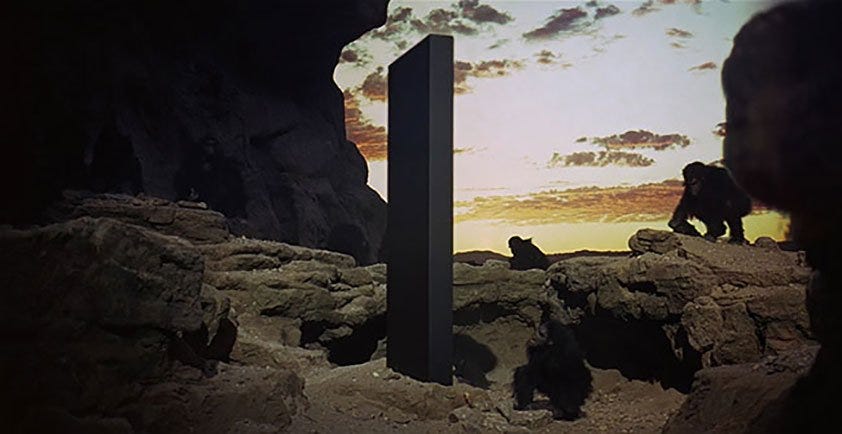
Rob pointed out something Kubrick said: “The God concept is at the heart of 2001.” That monolith isn’t just alien technology. It’s the scientist’s substitute deity, the thing that guides evolution, grants transcendence, and promises us immortality.
Sixty years later, Silicon Valley is still chasing the same false god through artificial general intelligence, or “AGI.”
The Demonic Double Standard
Here’s another thing that got me: Rob’s observation about Hollywood’s spiritual bias. Films will show you demons, possession, and satanic horror all day long—The Exorcist, Hellraiser, Event Horizon—and critics praise them as “sophisticated art.”
But try making a movie about angels, redemption, or divine transformation? “That’s silly. Unrealistic. Preachy.”
We’ve been conditioned to believe evil is more real than good. That darkness is more powerful than light. That cynicism is intelligence and hope is naivety.
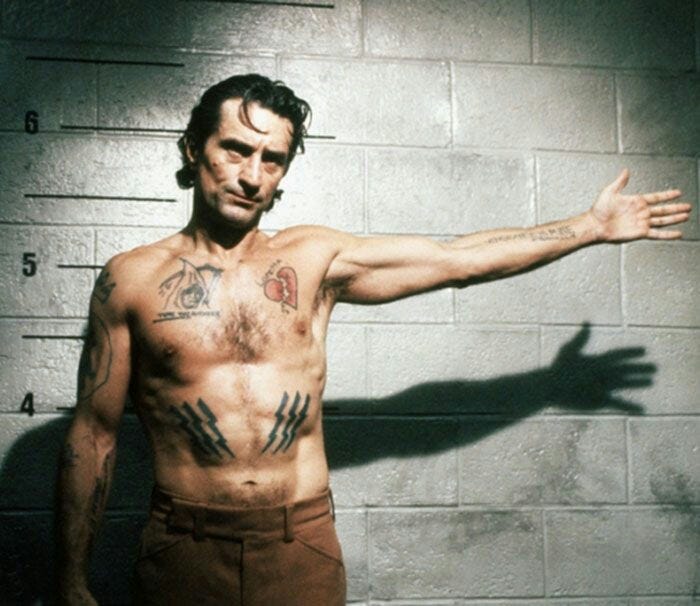
Rob shared something about Scorsese’s “Cape Fear” that was connected with these observation. That terrifying villain played by De Niro? Scorsese admitted in an interview that Max Cady is actually an angel sent by God to test a family on the verge of collapse. The film is about divine intervention disguised as criminal terror.
How many of us caught that spiritual dimension? I didn’t. But it reflects a degree of sophisticated understanding that even a life-and-death struggle can be used by God for good.
Indiana Jones and the Archaeologist Who Learned Nothing
Other forms of spiritual blindness show up even in films that explicitly deal with the divine. Rob and I discussed Raiders of the Lost Ark, where Indiana Jones witnesses the Ark of the Covenant supernaturally destroy an entire room of Nazis. Indiana Jones literally sees the power of God with his own eyes! (Well, sort of…)
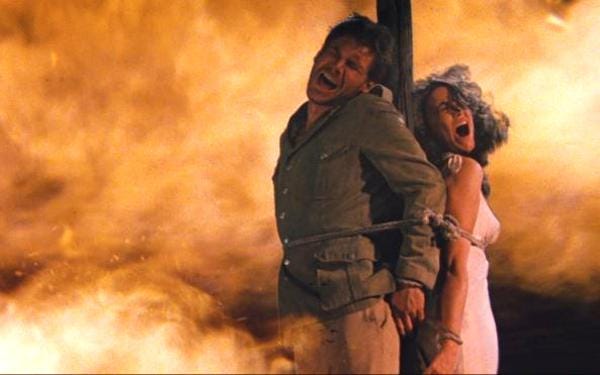
But by the end of the film, Indy is unchanged. No spiritual awakening. No transformation. He remains the same cynical archaeologist, treating the divine as just another artifact.
As Rob pointed out, even in a film about God’s power, the hero remains spiritually dead.
Why This Matters Now
What we’re witnessing isn’t just bad filmmaking. It’s spiritual warfare through cinema. When Rob said modern filmmakers “pander to critics” instead of taking creative risks, he’s identifying something deeper: the replacement of artistic courage with ideological compliance.
Filmmakers aren’t just cowardly. They’re making weapons for cultural destruction. Those who control the narrative about what’s “good” and “bad” in art now have unprecedented power to shape our collective consciousness, which they’re doing.
This is why conversations like this one with Rob these matter. The intention isn’t to make you despair, but to help you see clearly.
Once you understand that the stupidity is intentional, that the destruction is deliberate, that the spiritual emptiness in film is by design, you can’t be programmed by it anymore.
The Path Forward
Thankfully, people are waking up to the manipulation. We’re developing what Rob calls “media literacy,” which is the ability to see through the propaganda to the spiritual battle being waged against us beneath the surface.
The question isn’t whether we’ll completely disconnect from all media. The question is whether we’ll consume it consciously, with full awareness of what we’re inviting into our minds and souls.

As men, as fathers, as guardians of culture, we have a responsibility to see clearly and teach others to see. The stories we tell shape the world we create. And if we don’t tell better stories, if we don’t create with courage, if we don’t defend what’s beautiful and true, then we surrender the battlefield to those who would destroy everything that previous generations built.
Watch the full episode:
or check out our viral 54K-views interview from July:
Key Moments
[00:00:00] Hollywood’s deliberate destruction of cinema culture
[00:04:27] The $200 Kubrick scientist interview transcripts
[00:07:59] Scientists desperately seeking God through AI and aliens
[00:27:38] Why Christopher Nolan represents creative cowardice
[00:52:43] How internet reviews became weapons of cultural destruction
[01:54:20] The scientific method as replacement religion
[02:00:31] Indiana Jones witnesses God, remains spiritually blind
[02:08:18] Cape Fear’s villain revealed as divine angel
[02:37:35] Hollywood accepts demons but rejects redemption
Key Insights
Modern Hollywood deliberately creates terrible films to destroy cultural memory
1960s scientists revealed desperate need for God through AI and alien contact
Films eagerly portray demonic evil but mock positive spirituality as “unrealistic”
The monolith in 2001 represents scientists’ technological replacement for God
Permanent internet reviews transformed from feedback into ideological weapons
Christopher Nolan exemplifies the shift from risk-taking art to safe mediocrity
Cape Fear’s Max Cady is actually an angel testing a family’s commitment
Notable Quotes
“They don’t want to make good movies. They want to destroy old movies”
“Creating ultra-intelligent AI is the last invention man ever needs to make”
“The God concept is at the heart of 2001”
“Filmmakers used to have genuine passion and would risk bad reviews”
“They’ll accept the demonic version but reject positive spirituality”
“Modern filmmakers are just trying to pander to critics”
“Max Cady is actually an angel sent down to earth to test the family”
Listen to the podcast in audio:
Biblical Mentorship for Men


Learn more here: https://willspencer.co/mentorship
Will and Robert, excellent article! I enjoyed reading it! Also, I was wondering if I could quote from your article for a book I’m writing regarding Christians unlearning postmodern ideals and your section on the double-standard was great! Let me know if that is okay, thanks!