


A Nation Grieving in Real Time
Charlie Kirk’s tragic and violent death sent ripple effects through American society and beyond. Many saw, some unwillingly, the graphic footage of the assassination as it auto-played across social media.
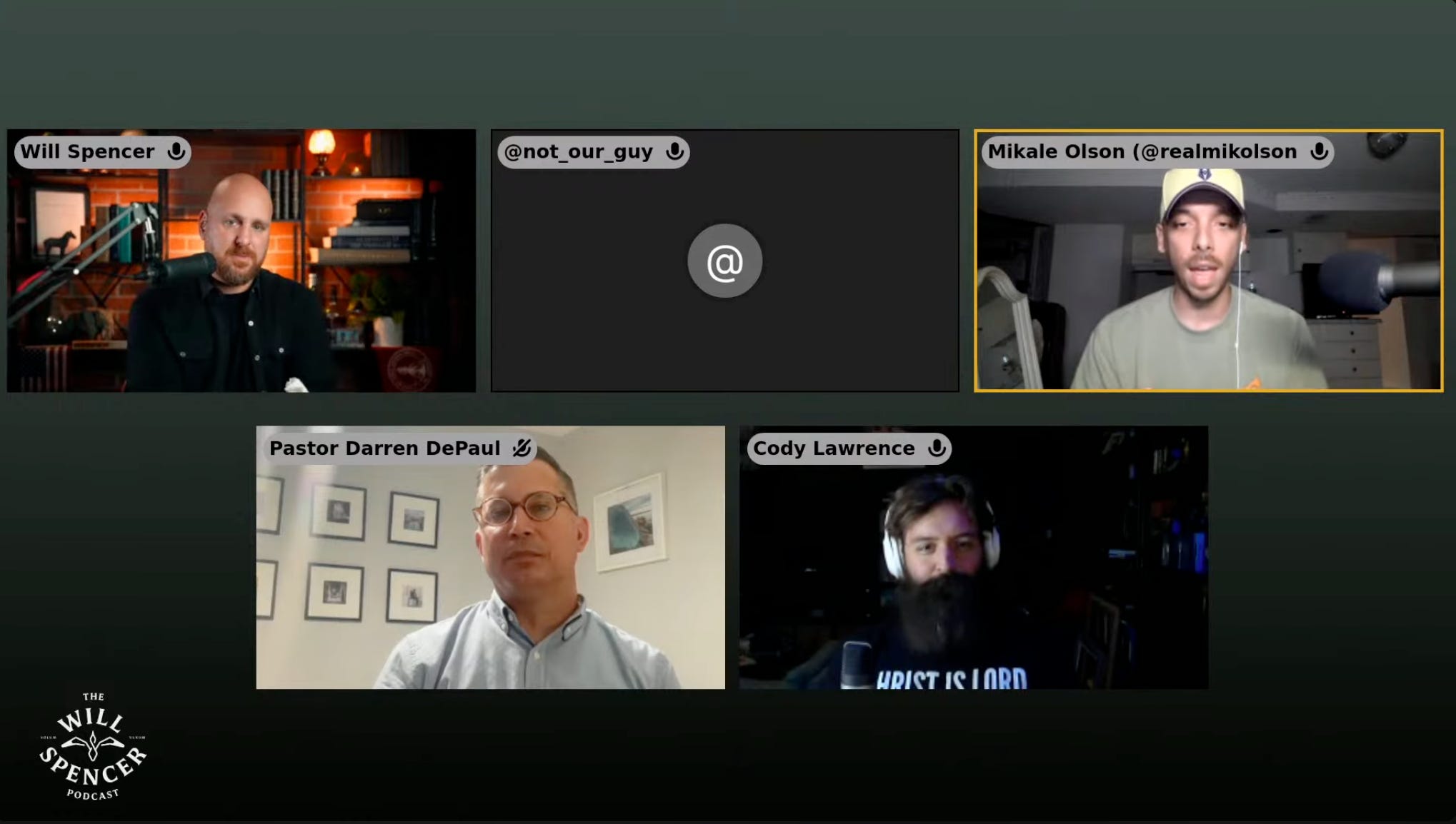
On this show, I convened a panel of Christian leaders, thinkers, and commentators—Will Spencer, Cody Lawrence, Hitler Hated Christ, Mikale Olson, and Pastor Darren DePaul—to walk through the emotional, cultural, and spiritual shockwaves that have followed.
My goal was for our conversation, to provide a window not just into personal grief, but into broader struggles within the church and nation.
Trauma, Grief, and the Shattering of Innocence
I started this episode in a unique way: with an extended monologue. I wanted to name what many felt: a collective trauma, experienced as both shock and grief. The successive tragedies—the viral stabbing of Irina Zarutskaya and then Kirk’s brutal on-camera shooting—shattered the protective walls separating most Americans from the naked violence that first responders and soldiers routinely face.
Millions, sheltered from the dark realities of brutality, were forced to reckon with the fragility of life and the abruptness with which “normal” can end.
This wasn’t just grief for a notable figure, but a loss of our innocence—an end to the illusion that public spaces or dialogue are inherently safe, and a newfound awareness of evil’s proximity.
As one panelist noted, “Can we ever take our eye off the ball again?”
Christian Martyrdom in the 21st Century
Then together, the panelists and I tackled the question of whether Kirk should be considered a Christian martyr. Several agreed that while Kirk’s assassination was not for a generic political position, it was directly tied to his biblical stance on sexuality and public faith.
As one speaker pointed out, he embodied the Christian life in the public arena, and his adversaries targeted him not just for his opinions, but for the worldview they represented.
This made the tragedy not only a personal loss for his family, but a profound one for Americans and Christians, who may have seen in Kirk’s dying moments the cost of public discipleship in a fragmented age.
The Church at a Crossroads: Complicity, Silence, and the Need for Shepherds
A major topic was the weakness within the American church—its failure to disciple meaningfully, to address evil, and to stand up in moments of crisis and confusion.
Reflecting on older congregants feeling traumatized and the eerie silence from some pulpits, Pastor DePaul insisted that shepherds must speak plainly and comfort their flocks amid both cultural and personal tragedy. “How can you not talk about it?” he asked.
Our conversation also highlighted a deeper problem: many have turned from the church because it too often offers platitudes without true community or discipleship. There are calls for revival, but also for laypeople—especially older generations—to step into mentorship and father-figure roles for young men floundering in a world of ideological seduction.
The Cultural Right: Friend-Enemy, Opportunism, and Nominalism
In the aftermath, my panelists noted a disturbing turn among right-wing influencers and online communities—embracing the “no enemies to the right” mantra, tribalism, and even conspiracy theories. Rather than promoting reflection or unity, some seized the moment to build platforms or wage ideological war, mimicking the worst tendencies of the left.
Christianity, it was argued, must answer not just with culture wars or reaction, but with introspection, self-sacrifice, and gospel-rooted truth. The church’s revival isn’t just a matter of the right having its turn, but of a return to authentic and costly faith.
Moving Forward: Honoring Legacy Through Courage and Dialogue
Each guest left listeners with a challenge: to honor Charlie Kirk by emulating his courage, his willingness to cross divides in respectful dialogue, and his refusal to repay evil for evil. It is not enough to idolize figures or react in rage. Real change—be it cultural, political, or spiritual—comes through service, sacrifice, and the difficult work of building up others, even when the world is watching and when it hurts.
As America reels and the church searches for its footing, the most powerful response isn’t opportunism or outrage, but to follow Christ’s call to serve at the expense of self—to honor not just the fallen, but the Savior who calls us to be more.
Listen here:
Connect with Turning Point USA
Connect with My Guests:
Cody Lawrence: https://x.com/WC_Lawrence
Hitler Hated Christ: https://x.com/not_our_guy
Mikale Olson: https://x.com/realmikolson
Darren DePaul: https://x.com/darren_depaul
The Will Spencer Podcast is a reader-supported Substack. If you enjoyed this podcast episode, please consider liking, restacking, or subscribing.
Leave a comment if something me or my guests said resonated with you.
Thanks so much!


